AI is reshaping how organizations operate and what talent looks like. A recent concept from Josh Bersin, “The Rise of the Supermanager,” provides a clear direction for HR’s transformation in the AI era. Middle managers are not disappearing. Instead, they are evolving into “Supermanagers.” These leaders can navigate human-AI collaboration, focus on skills, and drive rapid organizational learning and change.
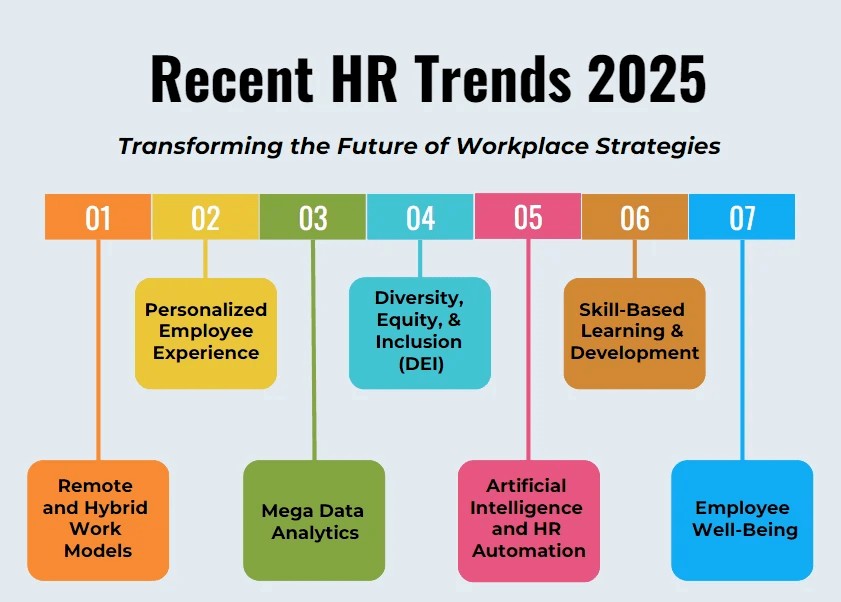
Source: Empxtrack
Why HR’s Role Must Be Redefined Now
Technology and capital investment are unprecedented. Companies are increasing their AI spending significantly. This accelerates changes in organizational structures and job roles. HR must participate in strategic capability planning and organizational design.
The skills gap and reskilling are core issues. Global research shows companies prioritize “skilling/reskilling.” HR needs to shift talent development from passive training to actively building skill systems.
Hybrid and flexible work is the new normal. Remote and hybrid models are key levers for attracting and retaining talent. HR must make systematic adjustments to policies, culture, and performance metrics.
Automation is a double-edged sword. AI boosts efficiency but also brings ethical, compliance, and employee care challenges. HR must leverage AI while managing its risks and impacts.
What is a “Supermanager”? How Can HR Support Them?
According to Josh Bersin, a Supermanager integrates AI tools, skill mapping, and capability-based talent management. Their scope is broader than traditional managers. They understand people, data, and processes. They also know how to help people learn to work with AI.
HR’s support can follow three main paths:
1. Capability Framework + Skills Taxonomy
Create an enterprise-wide skills language. Define core competencies and interchangeable skills for roles. Turn job descriptions from task lists into skill units. This enables AI-powered matching and personalized learning recommendations.
2. Embed Learning into the Flow of Work
Link learning directly to job performance. Use micro-learning, task-driven courses, and AI resource recommendations. LinkedIn and other studies show companies and employees view workplace learning as key for retention.
3. Build a “Human-AI Collaboration” Management Model
Establish AI competency assessments for managers. These include reading metrics, using AI for decisions, and explaining AI suggestions to teams. Integrate these skills into performance and promotion paths.
Five Things HR Must Do at the Organizational Level
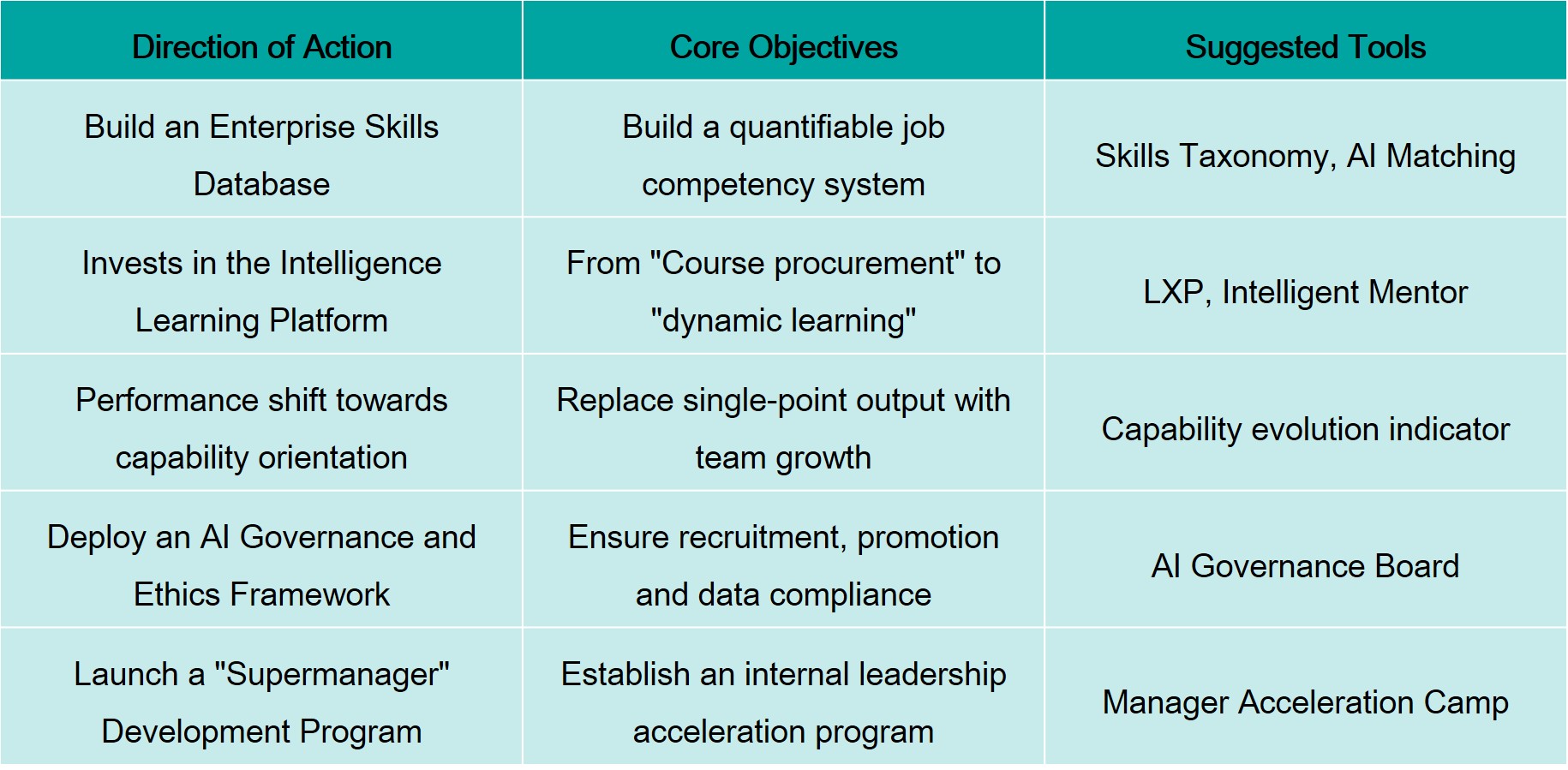
1. Build an Enterprise Skills Database (Pilot First)
Use job analysis and business unit interviews. Quickly build a 6-12 month MVP skills library. Use it with AI for candidate and internal mobility matching.
2. Shift L&D Budget from “Course Buying” to “On-Demand Learning + Platforms”
Prioritize investment in platforms. They should recommend learning paths and assess skills in real-time. Examples are Learning Experience Platforms and intelligent tutors.
3. Redesign Performance Management: Focus on Capability and Impact
Replace simple output metrics with “capability evolution.” Encourage managers to report results on team skill development.
4. Deploy an AI Governance and Ethics Framework
Define AI’s scope in hiring, evaluation, and promotion. Establish data usage rules and human review mechanisms. This reduces discrimination and compliance risks.
5. Launch a “Supermanager” Development Program
Design a “Manager Accelerator.” Use blended learning, real projects, AI tool bootcamps, and mentoring. Help middle managers gain measurable skills within 6-9 months.
Practical Advice for Chinese Companies
Start with the business to define capabilities. Don’t blindly copy global templates. First, select 2-3 high-value roles for skill sampling and pilots.
Prioritize “People Before Tech” when adopting AI. Ensure data quality and privacy compliance before introducing AI tools for hiring or L&D. Keep humans as the “final approver,” not just an observer.
Use hybrid KPIs to drive flexible work. Keep results-oriented metrics. Also, introduce employee experience indicators. Measure both output and retention/engagement.
Conclusion
AI won’t make HR obsolete. It makes HR the engine for organizational learning and change.
The future HR professional is not just a policy administrator. They are a Learning Architect, a Capability Builder, and a catalyst for growing Supermanagers.
HR is evolving from Personnel to Intelligent Business Partner. AI is giving HR more strategic influence and human warmth.
Comrise
At Comrise, we offer tailored solutions for the full-time, part-time, direct-hire, contract, and permanent talent that your business needs. For 40 years, we have delighted our clients and candidates by focusing on customer satisfaction, innovation, and flexible workforce solutions!
If you’re looking for new job opportunities click here, or if you’re looking for a reliable partner to help you secure top-notch candidates for hard-to-fill roles, click here. For more information, feel free to contact us, click here.